Spring flowers arrive with their own architecture. Bulbs sit heavy and round, narcissi lean toward the light, tulips keep growing after they are cut, and flowering branches throw out woody arms in every direction. A handmade ceramic vase can support all of that, but only if its shape agrees with the material. The useful questions are simple: how wide is the neck, how tall is the body, how stable is the base, and how much water does the vase hold?
Start with the Neck: The Vase's Most Useful Measurement
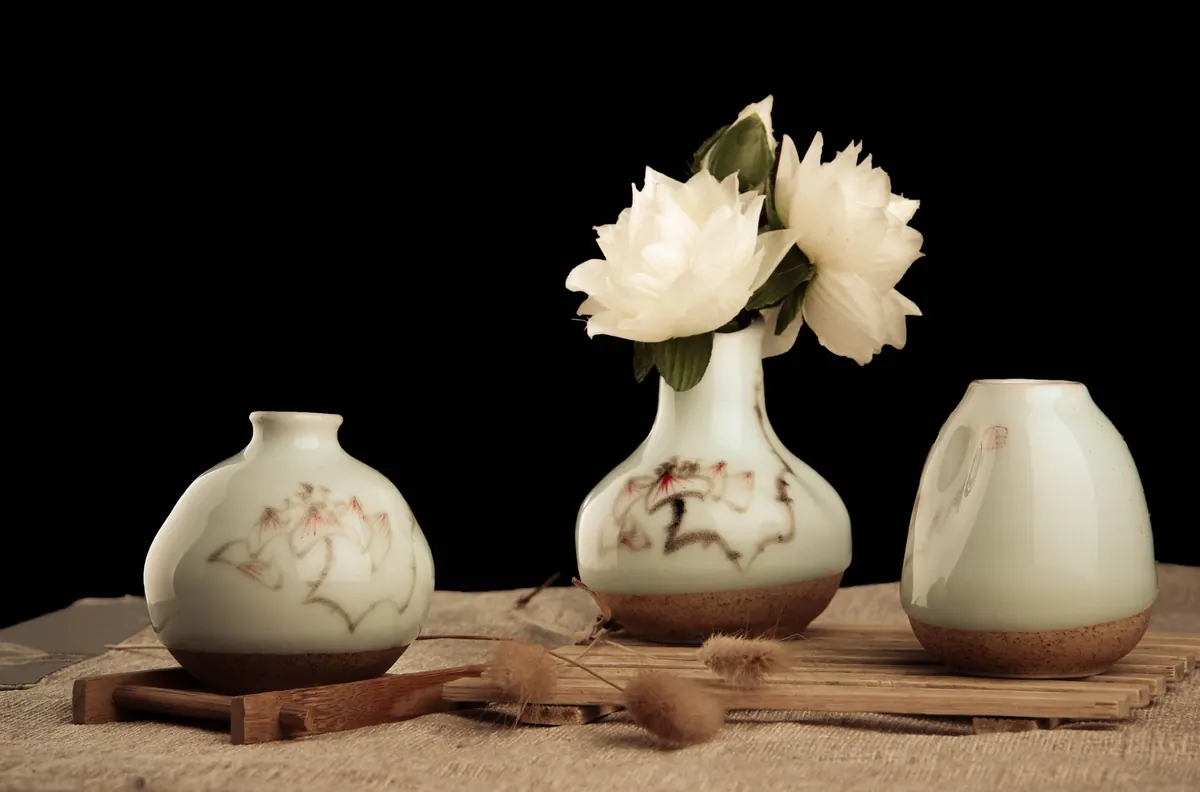
The neck does more work than any other part of a vase. It holds stems in a loose bundle, keeps a heavy bulb above the water line, or gives woody branches room to spread. A neck that is too wide lets a small bunch of muscari or violets collapse against the rim. A neck that is too narrow bruises tulip stems and makes a branch arrangement look pinched. The best neck is not simply narrow or wide; it is narrow enough to gather, wide enough to avoid bruising, and deep enough to hide the first few inches of stem.
For a compact spring posy, look for a neck that gathers stems without squeezing them. If the stems stand with only a little help from the rim, the opening is about right. If they rattle around, the vase is better suited to a fuller bunch or to branches. If you have to force them, choose another vase; the stems will suffer and the water will cloud faster. A small posy of grape hyacinths, for example, needs a neck that holds the thin stems in a cluster, while a mixed bunch of daffodils and tulips needs a little more room so the thicker stems do not crush each other.
Bulb vases follow a different logic. A hyacinth vase—ceramic or glass—has a narrow neck that cradles the bulb so the base sits just above the water. The roots reach down, and the bulb stays dry. A wide-mouthed bowl cannot do that job unless you add pebbles or a specialist insert. For narcissi, a neck that supports the stems a few inches below the flower is useful because the heads are heavy. For branches, go the other way: a wide mouth is not a fault but a requirement, because woody stems need room to cross and breathe. A forsythia branch forced into a narrow neck will sit upright and stiff; the same branch in a wider opening can lean and open into its natural shape.
Match Height to Stem Length, Not to the Shelf
A vase should look right with flowers in it, not only empty on a shelf. As a working proportion, cut stems usually look balanced when they are at least one and a half times the height of the vase. A short tulip bunch in a tall cylinder can disappear; the same bunch in a shorter, wider vase has room to open. For branches, the ratio changes. Forsythia, quince, cherry, and apple branches can be two or three times the height of the vase, but the vase must be tall and heavy enough to hold them.
Think about how the material grows. Hyacinths are low and dense, so a bulb bowl or a squat vase suits them. Narcissi have a long, graceful line and benefit from a vase that lets the stems arc. Tulips continue to grow in water, so leave space above the rim; a vase that looks generous when you arrange it will look crowded a few days later. Branches need a tall body to support the first few inches of stem, then open space above. A dozen daffodils, for instance, may look underfilled in a wide bowl but well proportioned in a medium cylinder that lets the flower heads fall slightly outward.
Handmade ceramics vary in height, which is part of their character. Measure the vase you are considering and compare it with the stems you expect to use. If you are buying for branches, choose a vase that reaches at least to the middle of the intended arrangement. If you are buying for bulbs, keep the body low enough that the flowers do not tower over the rim. It also helps to cut stems after you have chosen the vase, rather than cutting first and hoping the proportions work.
Stability Comes Before Style
Spring branches are sails. A tall vase with a narrow foot may look elegant on a table, but one open window or a nudge from a sleeve can send it over. Stability comes from three things: a base wide enough for the height, a heavy body, and a flat foot that sits firmly on the surface. Stoneware is generally more forgiving than thin porcelain for tall arrangements. A foot ring that is slightly wider than the lower body helps, and the base should be level, not wobbling.
Test a vase before you commit to it. Put it empty on the table where it will live and press gently on the rim. If it rocks, it will rock more when filled with water and branches. Fill it with water and try again. For very tall branches, place the vase on the floor or on a sturdy console rather than a windowsill or a narrow shelf. Keep the base away from the edge, and avoid tablecloths that can slide.
Do not overlook the weight of water. A wide bowl may be stable empty but heavy when full; a tall cylinder may feel firm until a branch leans and shifts the balance. The safest tall shapes are those with a broad foot, a slightly tapered body, and enough weight in the lower half to counter the stems above. If you love a lighter, more sculptural vase, use it for shorter stems or place it where it cannot be brushed past.
Look Below the Rim: Water, Glaze, and Cleaning
The inside of a vase matters as much as the silhouette. A narrow neck slows evaporation and helps hold stems, but it also makes the vase harder to scrub. A wide mouth is easy to clean and quick to arrange, yet it allows more water to evaporate and gives stems less support. For spring bulbs, a shallow water line is often enough; for branches, the vase needs enough depth to keep several inches of stem submerged. Check that the opening is not so narrow that you cannot reach inside with a brush.
Glaze and texture affect how a vase performs. A glossy interior sheds slime more easily, while a matte or unglazed interior may need more careful soaking and drying. If the vase is decorative and porous, use a liner or keep water changes frequent. Bulb vases in particular should be easy to rinse, because the roots and bulb bases can leave residue. A ceramic vase with a clean, smooth interior will serve spring stems better than one with a beautiful outside and a rough, difficult inside.
Think about volume, too. A vase that holds only a cup of water may need topping up every day in warm spring weather, especially with branches that drink heavily. A larger body gives you a buffer, but it also adds weight and can make a small bunch look lost. Match the water capacity to the arrangement: modest for hyacinths and violets, generous for tulips, narcissi, and flowering branches.
A Quick Shape Guide for Spring Materials
- Hyacinths: a bulb vase or squat bowl with a neck that holds the bulb above the water; avoid wide, shallow dishes unless you use pebbles or an insert.
- Narcissi and daffodils: a medium-height cylinder or a vase with a gently narrowing neck that supports heavy heads and lets stems arc.
- Tulips: a shorter, wider vase with room above the rim, because stems continue to grow and flowers open outward.
- Muscari, violets, and small spring posies: a narrow-necked bud vase or a small bottle shape that gathers thin stems into a tidy cluster.
- Forsythia, quince, cherry, and apple branches: a tall, heavy vase with a wide mouth and a broad foot; the body should support the stems and the base should resist tipping.
- Mixed spring arrangements: choose a middle course—a neck wide enough for thicker stems, a body tall enough for branches, and a base stable enough for shifting weight.
A good seasonal vase is not the one that looks most dramatic empty. It is the one that makes the flowers look as if they chose it. Start with the neck, check the height against the stems, test the base, and consider the water line below the rim. When those four things agree, the ceramic shape and the spring material do the rest.
Photo: Luke Y / Pexels