Two dinner plates come out of the same kiln, stacked on the same shelf, glazed from the same bucket. One has a rim of deep olive where the glaze gathered; the other is lighter, with a thin crescent at the edge. Neither is a mistake. This is what small-batch Italian ceramics look like when the hands, the material, and the fire are all allowed to have a say.
The same holds for a pair of candleholders that differ by a few millimetres, or a serving bowl whose blue shifts from cobalt to denim across the surface. Buyers often notice these differences before they notice the shape. The useful question is not whether two pieces are identical, but whether the variation belongs to the craft or signals a real problem.
What Small-Batch Means in an Italian Ceramic Workshop
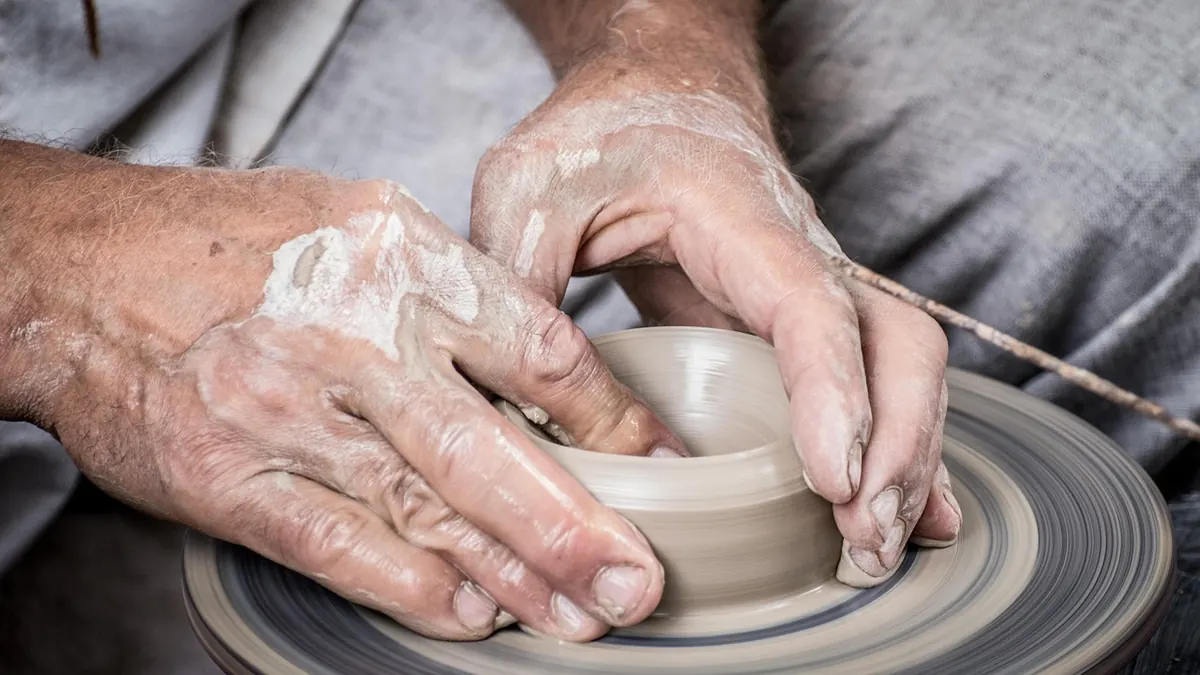
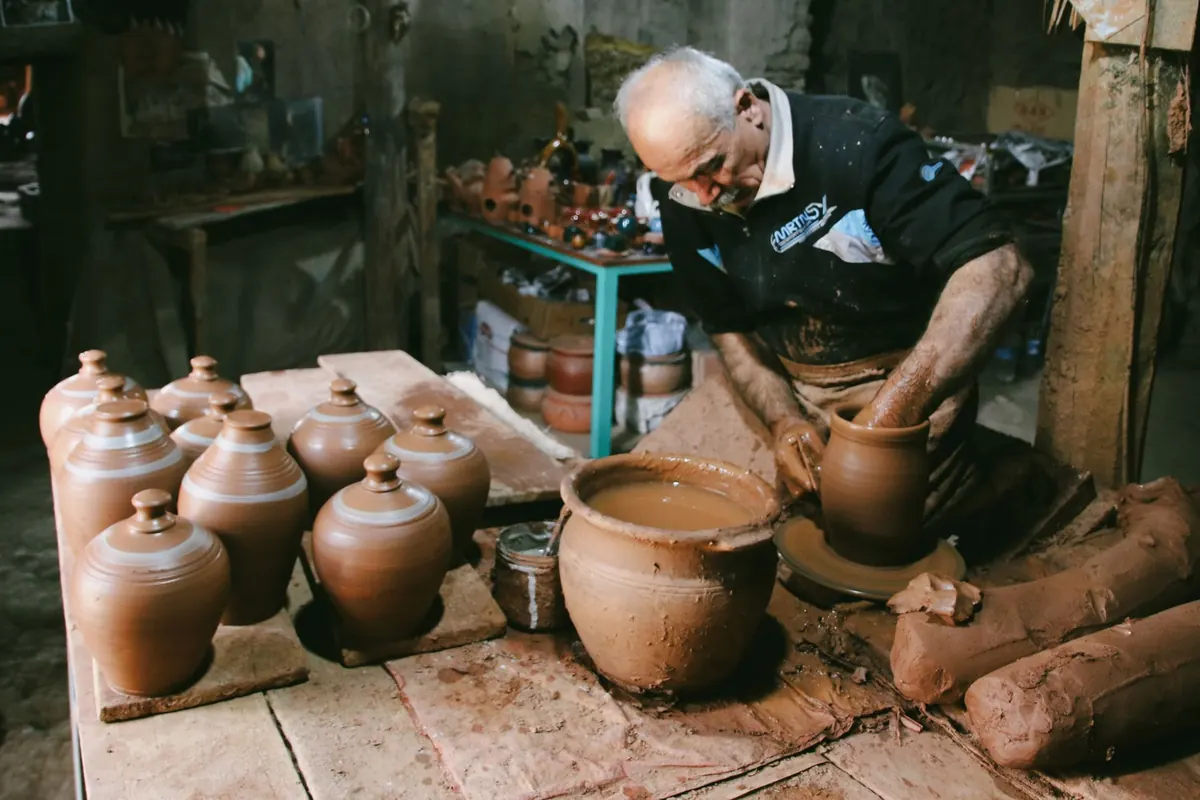
Small-batch means a limited run, often made to order or in short cycles that fit around drying time, kiln space, and the availability of a particular glaze. The clay may be thrown on the wheel or cast in a small mould, but either way the piece passes through many hands and many small decisions: trimming the foot, smoothing the rim, mixing the glaze, loading the kiln.
Even when a workshop uses moulds, the result is not a photocopy. Moulds wear. Casting slip varies in thickness. A potter fettles the seams by hand, and that hand pressure changes from one piece to the next. In maiolica-style work, the white tin glaze is applied by dipping or pouring, then painted with brushes. A brush loaded with colour for a large platter will behave differently on a small bowl an hour later.
The result is a family of related pieces rather than a row of identical units. That is the standard to keep in mind when you open a parcel and see a slight difference between two objects that were ordered together.
Glaze Pooling: Where Colour Collects
Glaze is glass in suspension. During firing it softens, flows, and settles. On a flat, level surface the glaze stays fairly even. On a vertical curve, a rim, a handle, or an incised line, gravity pulls it into the low points. That is pooling, and it is one of the most recognisable signatures of handmade ceramics.
On a plate with a carved border, the glaze can fill the grooves and leave the raised ridges paler. On a vase with a rolled rim, a bead of deeper colour may form just inside the lip. On a mug, the glaze often thickens where the handle meets the body. These are not painting errors. They are the glaze doing what glaze does when it is applied by hand and fired in a real kiln.
Pooling becomes a problem when it bridges a foot ring, sticks to a kiln shelf, or leaves a sharp bead that catches the finger. A maker will usually grind or rework a foot if the glaze has run too far. If you are buying a decorative piece, look at the base: a clean foot and a stable stance matter more than an absolutely uniform colour field.
Size Shifts and the Kiln’s Final Word
Clay shrinks as it dries and again during firing. Two bowls made from the same weight of clay can finish a few millimetres apart because one dried more slowly, one was trimmed a little thinner, or one sat closer to the heat source in the kiln. Rims can lift or settle. A plate may dry slightly oval before it ever reaches the glaze stage.
Firing does not correct those differences; it fixes them. The position of a piece in the kiln affects how much heat work it receives. A piece near the door may cool faster. A piece on a lower shelf may sit in a slightly different atmosphere. In a small kiln, these differences are part of the daily rhythm. In a large industrial kiln, they are controlled within much tighter limits—and the look is correspondingly more uniform.
For decorative objects, a small size shift is usually part of the charm. If you are ordering a pair for a symmetrical display, say so when you buy. A good maker can select two pieces that sit well together, even if they are not identical. Ask for the actual dimensions of the pieces being sent, not just the nominal size of the range.
Colour, Tone, and Surface Character
Glaze colour is not flat paint. It depends on the thickness of the application, the clay underneath, the peak temperature, the atmosphere in the kiln, and the speed of cooling. A blue glaze over a pale clay can read crisp and bright on one piece and softer and greyed on another. A red glaze may break to brown on a rim where it thins. Speckles from iron in the clay can surface in one firing and stay hidden in the next.
Hand-painted decoration adds another layer. A brushstroke can be dense at the start and dry at the end. A motif repeated around a bowl may be spaced slightly differently as the potter turns the piece. On a larger surface, the painter may adjust the composition to the curve of the object. That is not inconsistency for its own sake; it is the natural result of working by eye and by hand.
These differences are often more visible in matte glazes, which scatter light, and in glazes that are deliberately layered. They are less pronounced in simple, glossy, single-colour finishes, but they rarely disappear entirely. Photographs can flatten them. A screen also changes colour. If tone matters to you, ask for a photo of the actual piece in daylight.
When Variation Is a Defect
Not every difference is charm. A piece should be structurally sound, stable, and fit for its intended use. The line between character and defect is usually practical rather than aesthetic. Use this as a guide:
- Acceptable variation: glaze pooling in a rim, handle, or carved detail; a slight tone shift between two pieces; a small size difference within a pair; visible brush marks in hand-painted decoration.
- Worth checking: a sharp glaze bead, a rough patch on a rim, or a foot that rocks on a flat surface.
- Ask the maker: a crack that runs through the wall, glaze that is flaking or crawling away from the clay, a strong chemical smell, or a base that feels unstable.
If something worries you, photograph it in daylight and describe what you feel as well as what you see. A responsible maker will explain what is normal for that clay and glaze, and will put things right if a piece has genuinely failed.
Buying and Living with Variation
Online, ask for a photo of the actual piece you will receive, especially if you are buying a single statement object. If you are ordering a set, tell the maker what matters: matching height, a consistent tone, or a mix of related pieces. Those are different requests, and a small workshop can usually work with them.
- Confirm the dimensions and the maker’s tolerance for variation, so you know what to expect.
- Decide whether you want a matched pair or a family of pieces that share a glaze but not an exact shape.
- Check the base, rim, and any contact points when the piece arrives.
- Keep the maker’s care note with the piece, and follow it for cleaning and display.
At home, variation becomes easier to live with when you stop treating the pieces as a matched set. Group them by tone rather than by exact size. Rotate a pair so the differences read as intentional. On a shelf, a slight shift in height can look more interesting than two objects lined up like soldiers. And if a piece is decorative rather than functional, let the surface do the work: pooling and brush marks are often what draw the eye first.
A Practical Last Word
A small-batch Italian ceramic is a record of a particular day in the workshop: the clay, the weather, the glaze batch, the position in the kiln. The differences are not a failure of control. They are what remains when control is balanced with material and handwork. Learn to read those differences, check the practical points, and ask questions when something feels wrong. Then choose the piece that catches your eye—not the one that looks most like the next one on the shelf.