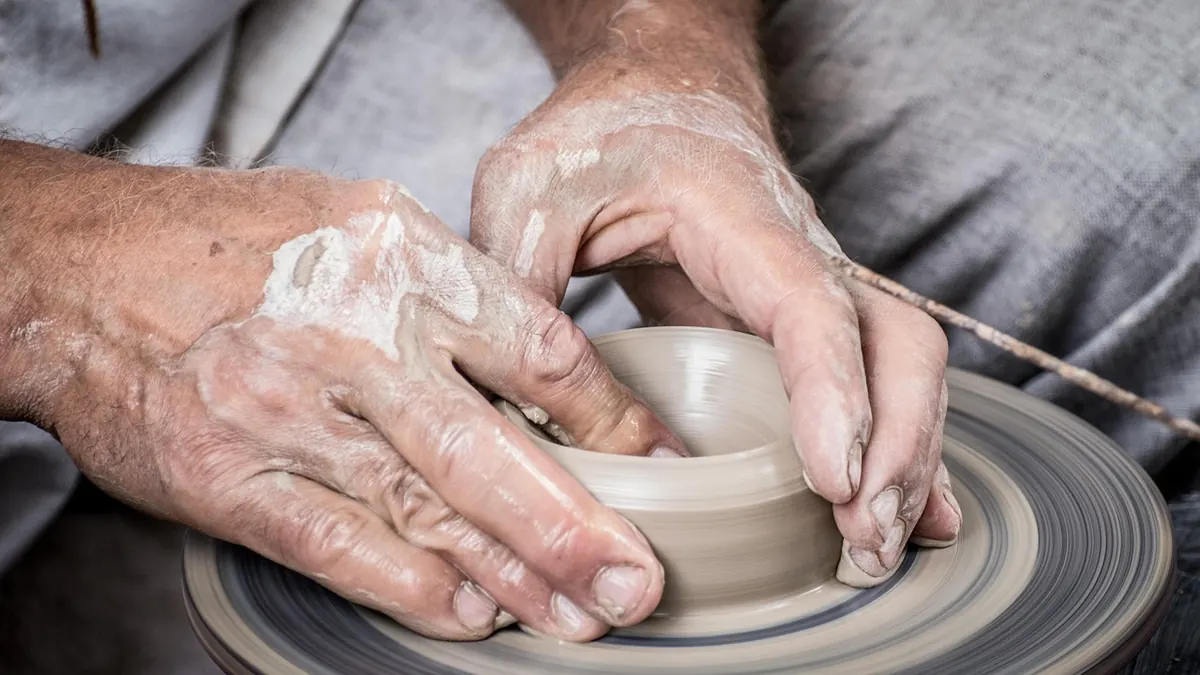
Most kitchens hold the same quiet mismatch: a shelf of plain white dinner plates, a stack of bowls from some long-ago set, and one handmade mug you reach for every single morning. The mug feels different in the hand. Slightly heavier, the glaze uneven in a way that catches the light. Everything else is perfectly fine and somehow anonymous.
There's no need to replace the set. Handmade ceramics work best when they're added rather than substituted, and a table where a rustic stoneware bowl sits beside a factory porcelain plate usually looks more considered than one bought all at once. The trick is doing it on purpose — with color, texture, shape, and scale.
Start by looking at what you already own
Empty one shelf and put everything on the counter in daylight. Not because you need to inventory it, but because most people misremember their own dishes. Is the white actually cool and blue-toned, or warm and creamy? Is the glaze high-gloss or soft matte? Are the rims wide and flat or sharply curved?
Then decide what role the handmade pieces will play. There are two useful models. In the first, handmade ceramics become the everyday base and the old set slowly moves to the back of the cupboard — one plate, then two, over a year or two. In the second, handmade pieces are the seasoning: a serving bowl, a jug, a set of small bowls for olives and nuts, used alongside the existing set at almost every meal. The second approach is cheaper, faster, and honestly harder to get wrong.
Build a color bridge, not a color match
Trying to match an existing glaze exactly is a losing game. Glazes vary from batch to batch, and a near-match reads as a mistake, while a clear second color reads as a decision. So go one full step away rather than half a step.
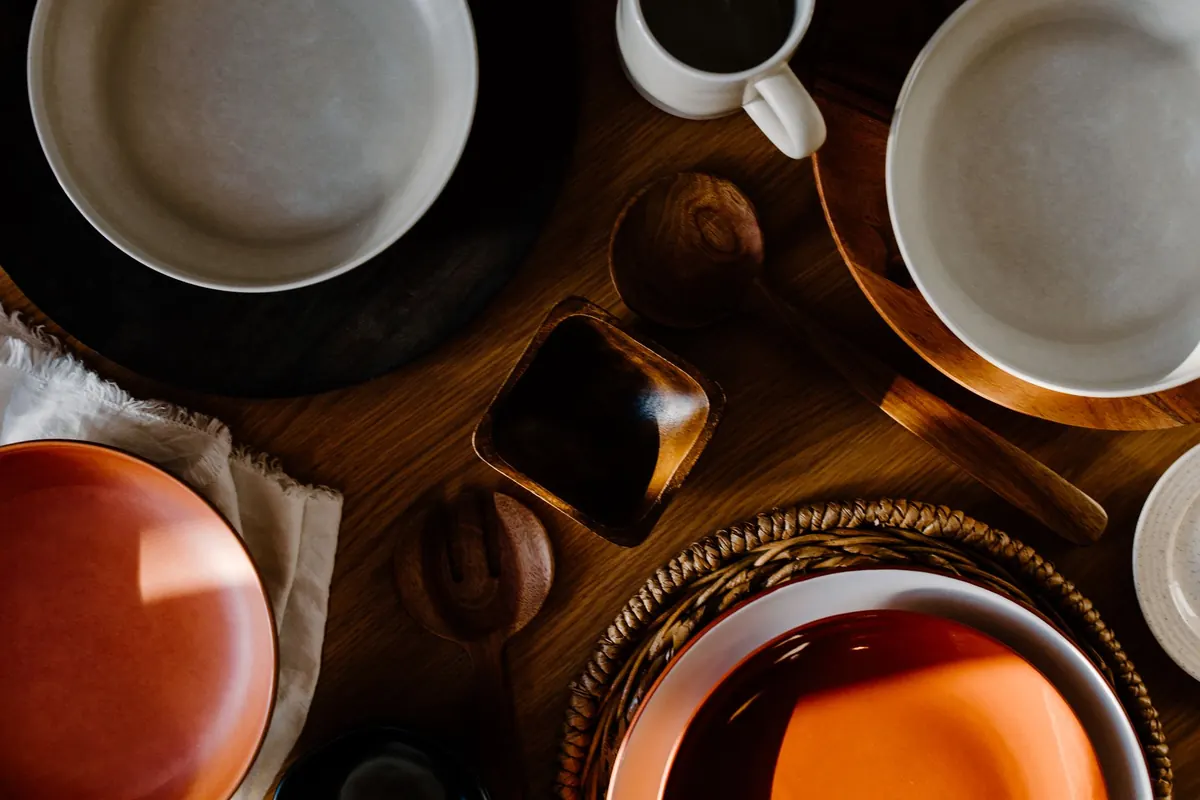
If your base set is cool, bright white, lean into glazes that contrast honestly: honey, oatmeal, charcoal, deep green. If your base is cream or off-white, terracotta and speckled buffs sit easily beside it, and a soft blue-grey gives you contrast without a jolt. Warm-toned sets and pale celadon greens are a reliable pairing too — the green picks up the warmth without fighting it.
Limit the palette
Two or three glaze colors across a whole table is plenty. A color that appears once looks like an accident; the same color repeated in a bowl, a jug, and a serving platter looks like a scheme. This is the single easiest way to make mixed tableware look intentional.
If your set already has pattern
Patterned dishes — blue-and-white, thin stripes, a floral border — give you something to pull from. Choose one solid handmade color that repeats a shade already in the pattern, and keep the handmade shapes plain. Two competing patterns at one setting is where a table starts to look like a jumble sale.
Mix textures so the table isn't flat
Finish matters more than most people expect, especially at arm's length across a table. A glossy factory plate next to a matte stoneware bowl gives each piece a clear voice; two high-shine surfaces side by side tend to blur into one reflective mass.
Look for small textural details that give the eye something to hold: an unglazed foot ring, a raw clay rim, iron speckles in the body, faint throwing lines on a bowl's interior. One or two strong textures per table is enough. If a piece already has a heavily ribbed or carved surface, keep its neighbors quiet.
Let shape do some of the work
Round factory plates are forgiving neighbors. They accept irregular handmade bowls without complaint, partly because a bowl's rim sits above the plate and partly because nobody expects two bowls to line up. Plates are fussier. A handmade dinner plate with a wobbly rim next to three perfectly circular ones will always draw the eye, which is fine if that's what you want and irritating if it isn't.
At a single place setting, let one piece be the character and the others be calm. A handmade bowl on a plain plate: good. A handmade bowl, a handmade side plate, and a patterned dinner plate: too much conversation at once.
For storage, keep rim diameters roughly similar within a stack and give handmade pieces their own short pile if they don't sit comfortably with the others. A three-plate handmade stack beside a ten-plate factory stack looks tidy. Interleaved, both look messy.
Get the scale right
Scale is where most mixes go wrong. Handmade pieces shrink in the kiln, and a bowl that looks generous in a photograph may hold noticeably less than the one you use for soup. Measure the dishes you actually eat from before you commit — the width across the rim, and for bowls, how much liquid they hold.
Serving pieces are the easiest bridge. A large handmade platter, a wide shallow bowl for pasta, a jug for water: these sit next to standard plates without competing, because everyone understands that serving dishes aren't supposed to match the place settings.
Three mixes that work
- Plain white dinner plates with speckled stoneware side plates and one matte olive serving bowl. The speckle links to the white; the olive does the talking.
- A cream or off-white set with terracotta-toned shallow bowls, plus a glossy white jug that repeats the original set's finish.
- A patterned set with solid handmade bowls in one color lifted from the pattern, and a neutral handmade platter to separate the patterned plates on the table.
Practical notes for daily use
Check the maker's guidance for each piece before you build a routine around it. Many handmade stoneware pieces are dishwasher-safe, but glazes and clay bodies differ, and hand-washing a favorite bowl costs you two minutes. Avoid sudden temperature changes with any ceramic — an oven-hot bowl into a cold sink, or a freezer dish into a hot oven, is the usual cause of a crack. When stacking, a felt or cork pad between plates protects the glaze on both the handmade piece and the factory one.
Bring home one piece and live with it for a week
Before buying a set of anything, use a single bowl or plate alongside your existing dishes for a week. You'll find out quickly whether the color holds up in your kitchen light, whether the weight suits you, and whether it earns its place on the shelf or merely occupies it. If it does earn it, buy the second piece at the same pace. Tables built that way tend to look like someone's taste rather than a shopping decision — which is exactly what handmade ceramics are for.
Photo: Tara Winstead / Pexels